After 25 years of formation and development, the Vietnamese stock market is entering an accelerated phase toward market upgrading, transitioning into a new operating landscape – one in which corporate governance capability, transparency, and the ability to build trust and reputation have become decisive factors in accessing and sustaining long-term capital flows.
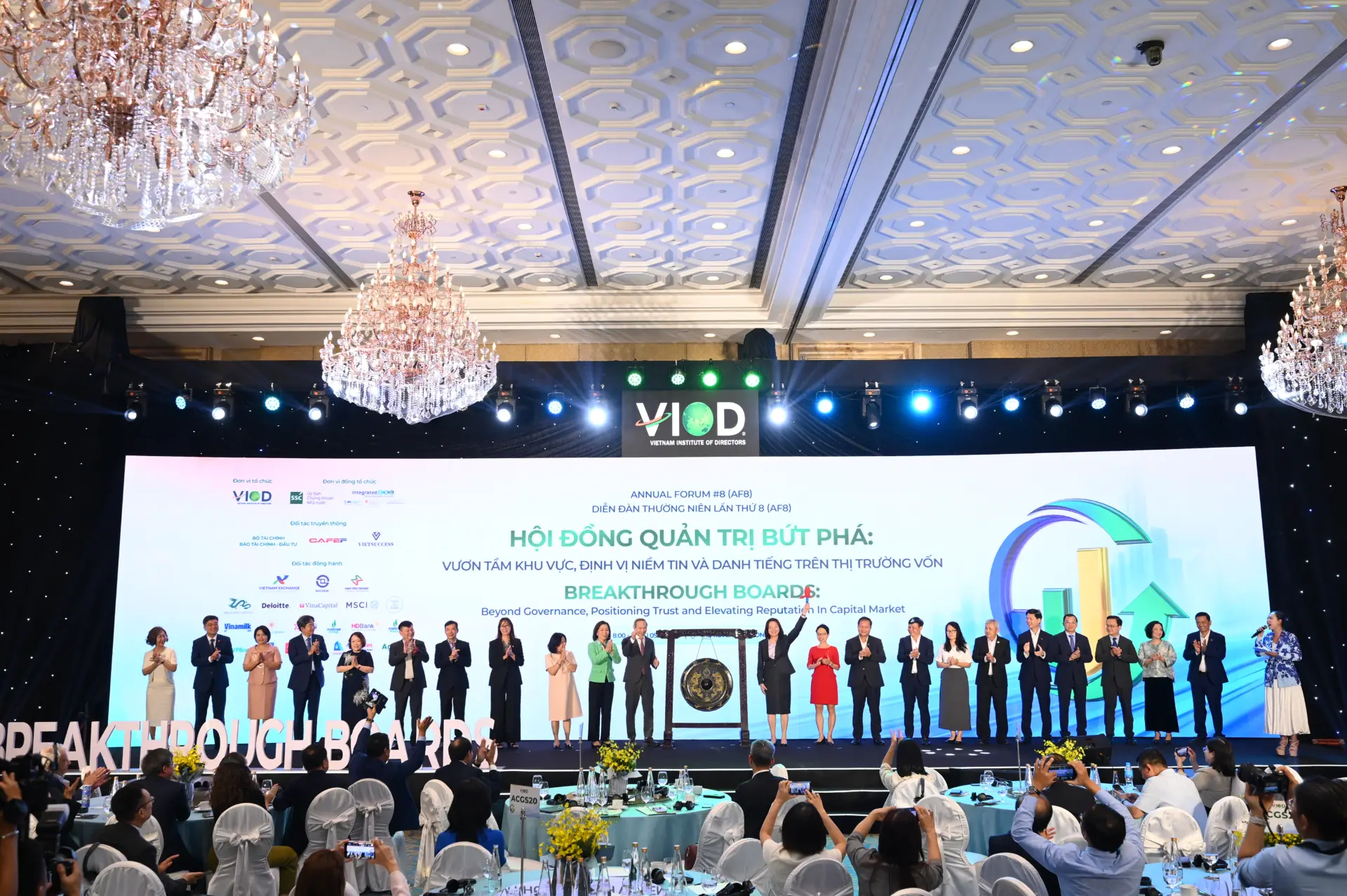
The Vietnam Institute of Directors (VIOD), a pioneering – professional – independent organization in corporate governance, hosted its 8th Annual Forum (AF8) on December 5, 2025, in Ho Chi Minh City. Recognized as the country’s most authoritative professional forum on corporate governance and sustainability, AF8 brought together the full spectrum of market stakeholders. AF8 gathered more than 350 senior leaders, including representatives of regulatory authorities, Chairs, Board Members, Chief Executive Officers, and Executive Management from over 250 listed and public companies, and large-scale private enterprises, alongside financial institutions, advisory firms, and domestic and international investment funds.
Under the theme “Breakthrough Boards: Beyond governance, positioning trust and reputation in the capital market”, AF8 convened business leaders to exchange perspectives and commit to action in upgrading their corporate governance “operating systems”, moving beyond traditional compliance-driven mindset to compete in regional and global capital markets with two critical assets: trust and reputation.
Market upgrading is not the end goal
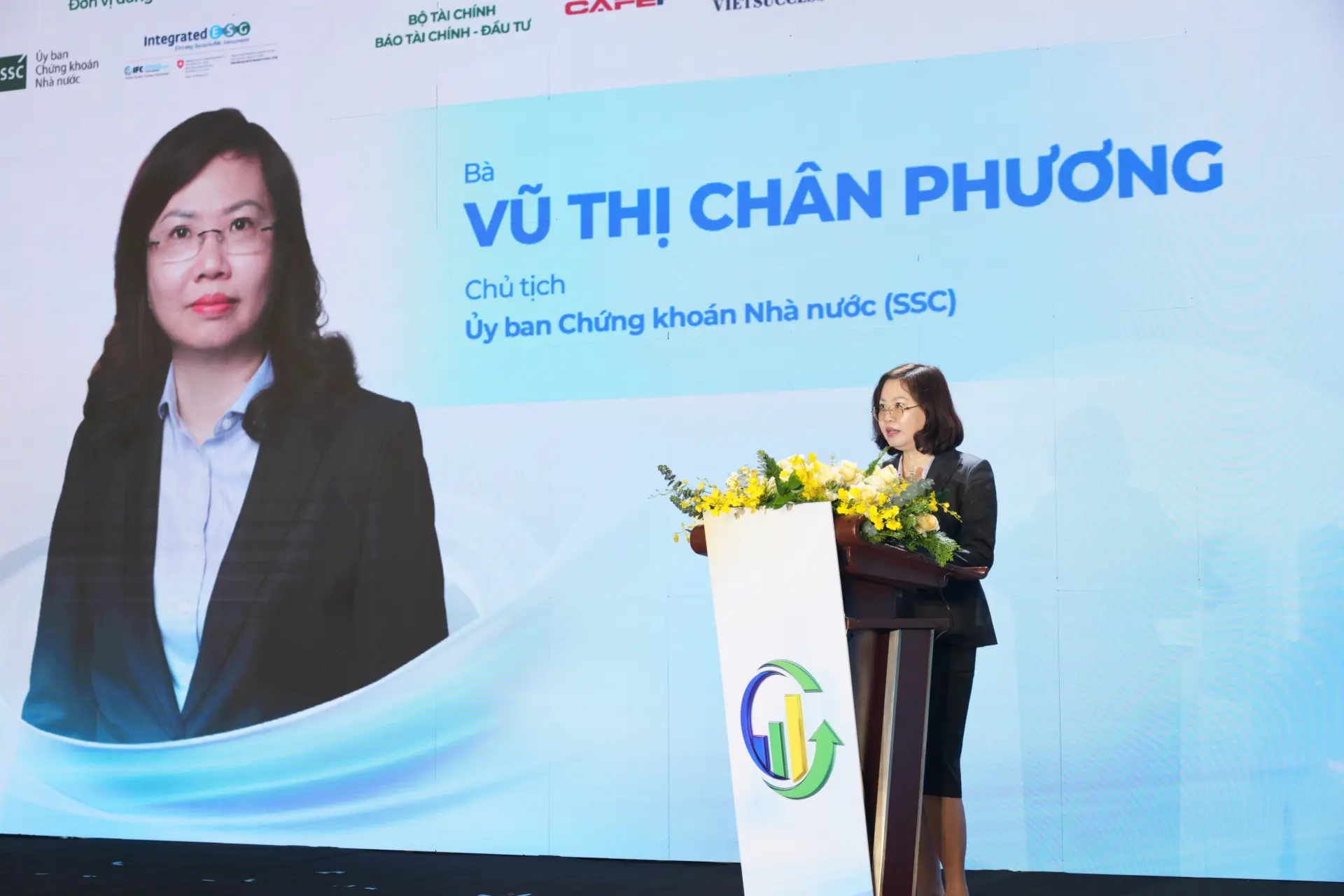
In her opening speech at AF8, Ms. Vu Thi Chan Phuong – Chairwoman of the State Securities Commission of Vietnam (SSC), emphasized that “market upgrading is not the end goal. It is only the beginning of a new phase of development – one that demands higher standards of transparency, efficiency, and investor protection”.
From an international perspective, Ms. Nguyen Hong Giang – Senior Program Officer at the Swiss State Secretariat for Economic Affairs (SECO), echoed this view, underscoring that a strong governance culture is the key for Vietnam to fully unlock its potential as a resilient, attractive, and credible economy. She noted that today’s investors clearly recognize that sustainable financial performance is closely linked to governance standards that prioritize transparency, accountability, and sustainability.

In addition, according to Ms. Elsa Ben Hamou Dassonville – Head of APAC Sustainability & Climate Solutions Specialists at MSCI, global capital is not chasing short-term growth; it seeks confidence in companies that are transparent, well-governed, resilient, and equipped with a clear transition roadmap.

Vietnam’s economy: Moving forward with optimism, breaking through with reform
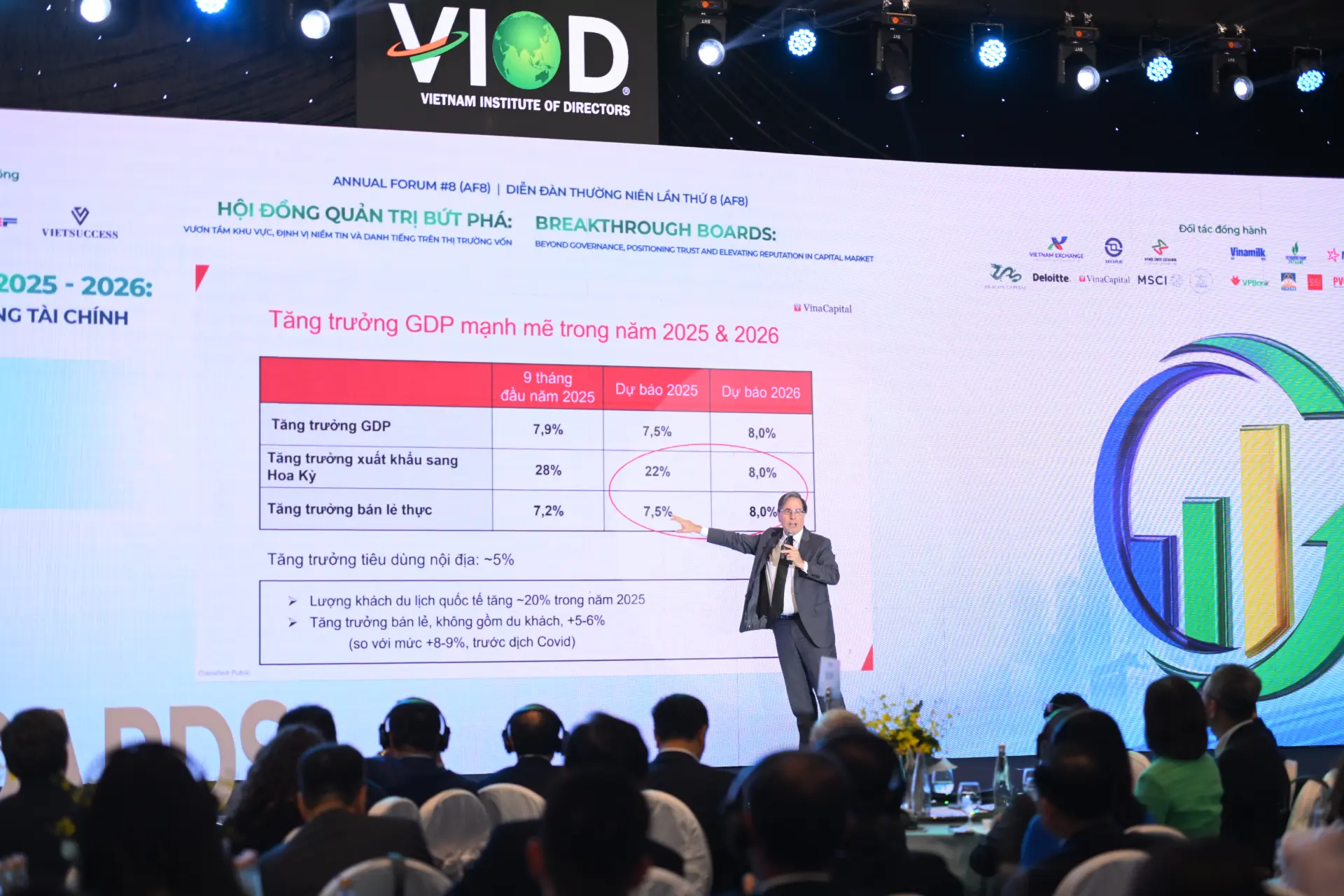
At AF8, Mr. Michael Kokalari – Chief Economist of VinaCapital, painted an “optimistic yet cautious” picture of Vietnam’s economic outlook. Key growth drivers – including exports, international tourism, and infrastructure investment – are expected to continue supporting the economy in 2026, while domestic consumption is projected to recover more visibly.
He noted that inflation remains under control, although exchange rate pressures persist amid a monetary policy stance focused on supporting growth. From a longer-term perspective, Mr. Kokalari emphasized that institutional reforms, lower capital costs, and the development of a truly competitive AI industry will be critical pillars enabling Vietnam to accelerate growth and move up the value chain.
Corporate governance – A global currency
Discussions at AF8 revealed a growing consensus: corporate governance has become a “global currency”, linking corporate value with investors not only domestically but also internationally. This shift places corporate governance at the heart of sustainable growth strategies, requiring companies to adopt and practice governance standards aligned with regional and global benchmarks.
According to Ms. Alejandra Medina – Asia Corporate Governance Program Manager at OECD, corporate governance is no longer an internal matter but a “shared language” through which investors compare, assess, and position companies. The G20/OECD Principles of Corporate Governance serve as a common reference framework, enabling investors to gauge corporate maturity not only by financial results, but also by how companies make decisions and conduct themselves during periods of market volatility.
Regionally, the ASEAN Corporate Governance Scorecard (ACGS) has been implemented to raise governance standards among publicly listed companies, supporting deeper capital market integration within ASEAN and promoting the recognition of companies as “ASEAN Asset”. According to Mr. Phan Le Thanh Long – CEO of VIOD, inclusion on this list is akin to a “seal of approval”, affirming governance quality and credibility – particularly for foreign investors – and expanding access to regional capital markets.
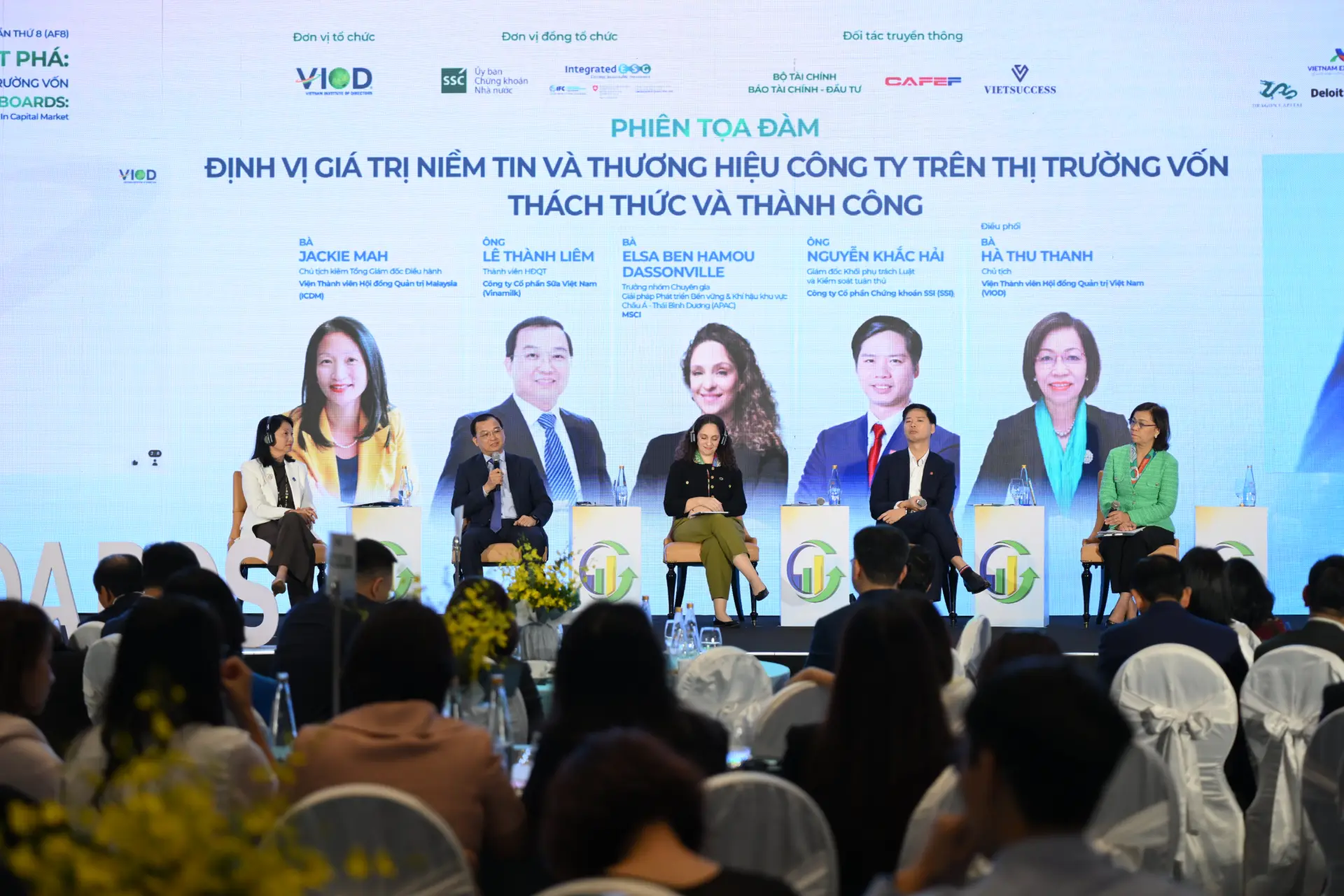
Drawing on international experience, Ms. Jackie Mah – President & CEO of the Institute of Corporate Directors Malaysia (ICDM), highlighted that Boards play a central role in translating international standards and frameworks into effective, substantive governance capabilities within enterprises. According to her, promoting Board diversity – across structure, tenure, experience, expertise, and skill sets – is essential to fostering a healthy governance framework and culture.
Building trust and reputation – Strategic non-financial assets of enterprises
From the perspective of Vietnamese enterprises, Mr. Le Thanh Liem – Board Member of Vietnam Dairy Products JSC (Vinamilk), noted that the gap between domestic regulations and international standards can only be narrowed through substantive Board action. Proactively issuing Board resolutions and conducting self-assessments against recognized corporate governance benchmarks not only reflects a modern governance mindset but also lays the foundation for building sustainable trust and reputation. In this context, regional and international standards are viewed as strategic destinations that enhance corporate credibility, rather than merely formal compliance requirements.
From the perspective of a securities firm, Mr. Nguyen Khac Hai – Managing Director of Legal and Compliance at SSI Securities Corporation (SSI) – emphasized that trust and reputation are intrinsically linked: reputation builds trust, and trust, in turn, reinforces reputation. At SSI, these two intangible assets are cultivated through three core pillars: enhanced transparency, a culture of compliance embedded across the entire organization, and automated governance systems enabled by digitalization and robust processes.
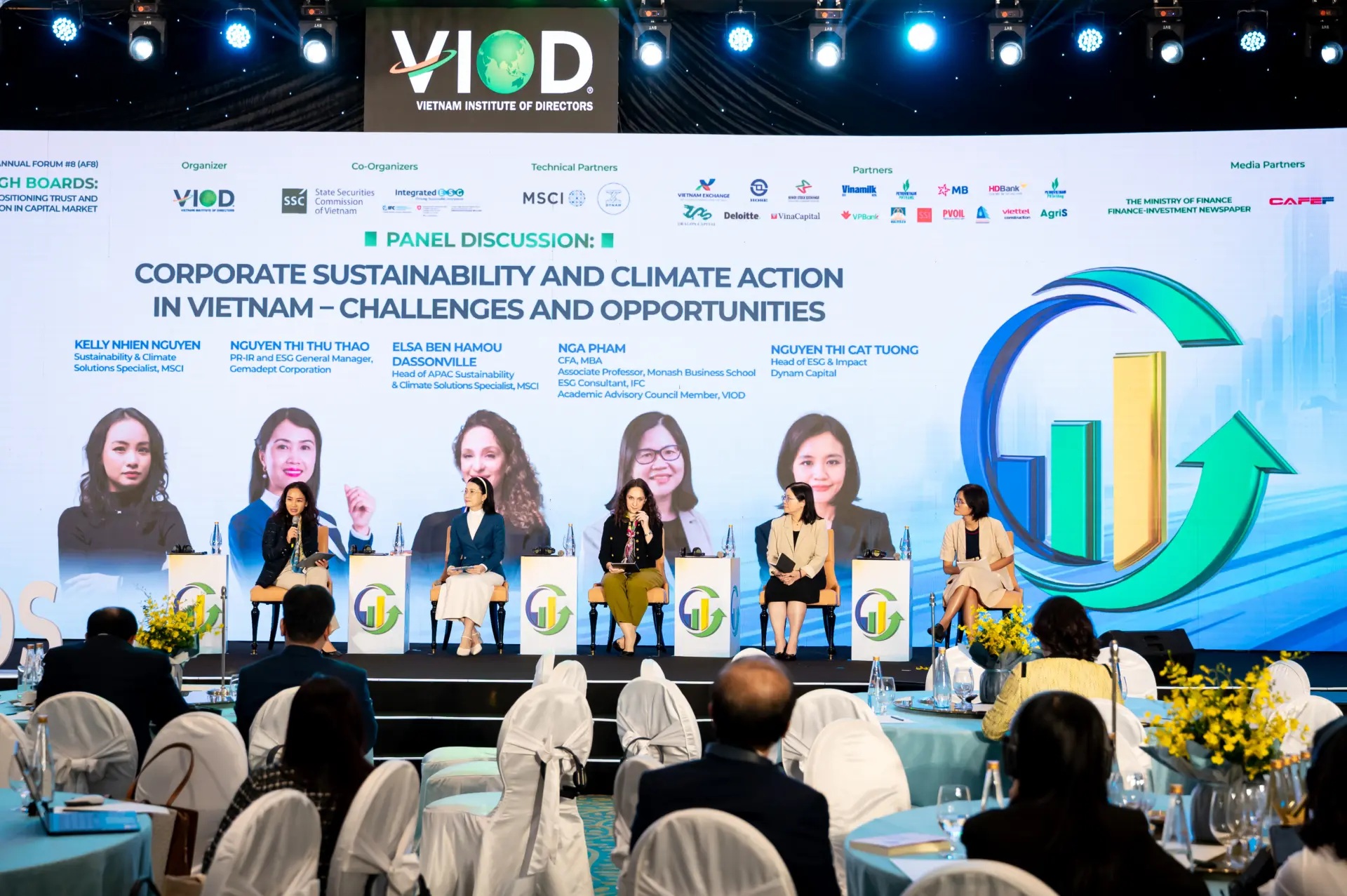
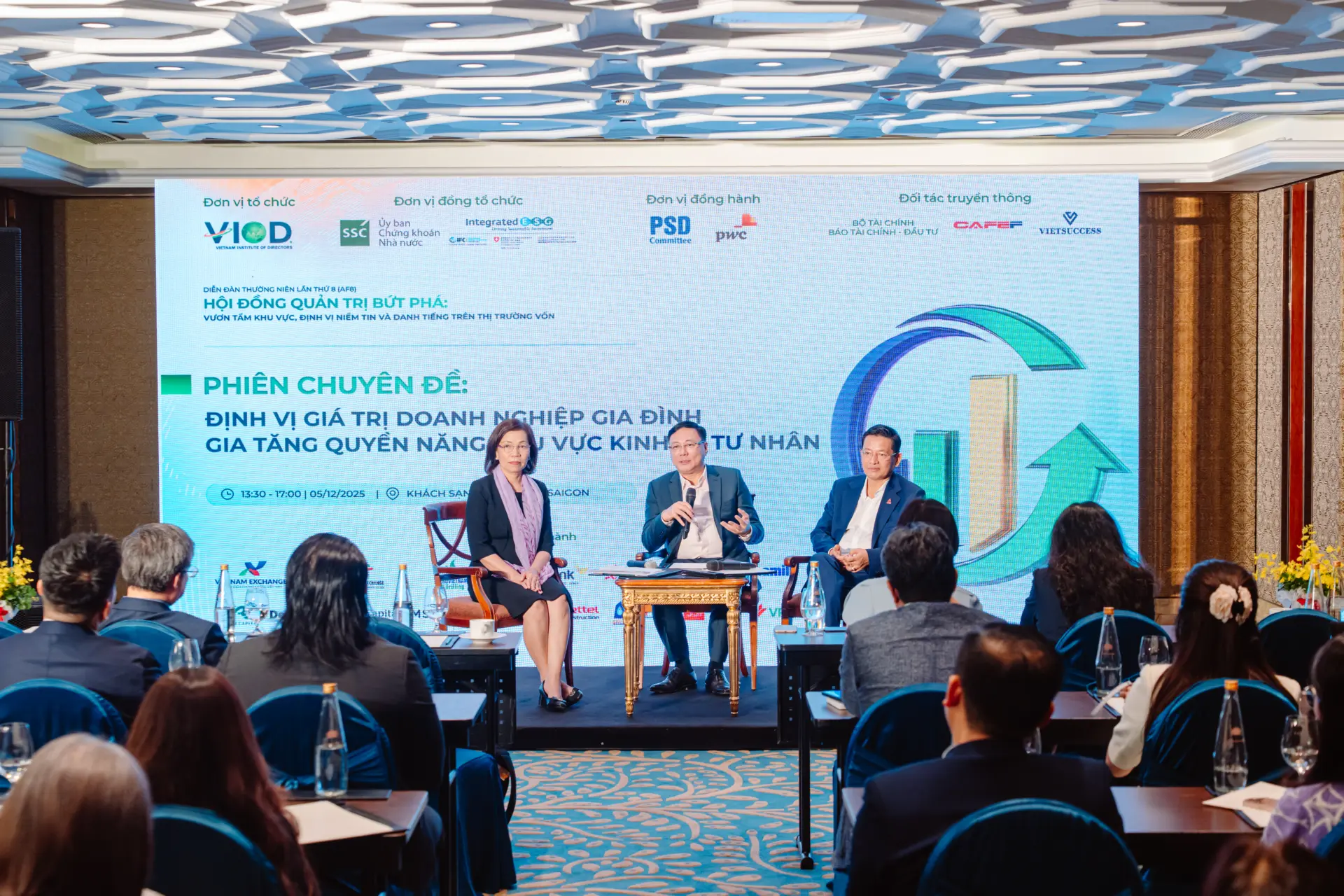
In addition, two dedicated thematic sessions at AF8 reinforced a consistent message: regardless of business models – whether strengthening regional foundations or accessing global capital markets – the ability to build trust and reputation ultimately rests on the quality of governance. From integrating ESG and climate-related risk governance into long-term strategy, to strengthening succession planning, dialogue, and decision-making in family businesses, all efforts converge on one objective: enhancing governance capacity to build trust, attract quality capital, and affirm the position of Vietnamese enterprises in an era of deeper integration.
ACGS20 & VNCG50: A launchpad for elevating corporate governance standards
For the first time in Vietnam, VIOD introduced the “ACGS20 – ASEAN Aspiration” initiative. The initiative focuses on 20 pioneering companies with clear strategies and action plans to enhance governance quality, strengthen transparency, and work toward achieving “ASEAN Asset” status in upcoming ACGS assessments. ACGS20 aims to contribute to the ASEAN Capital Markets Forum’s (ACMF) capital market development strategy for 2026–2030, while improving Vietnam’s overall corporate governance performance relative to the region.
At the same time, 2025 marks the second year of VIOD’s implementation of the Vietnam Corporate Governance Scorecard Initiative – VNCG50, which recognizes 50 pioneering Vietnamese companies committed to improving corporate governance practices. The VNCG50 aims to support and encourage listed Vietnamese companies to enhance their governance practices in line with ASEAN standards and criteria, thereby narrowing the governance gap between Vietnam and the region and laying the groundwork for the development of the VNCG50 Index in 2026.
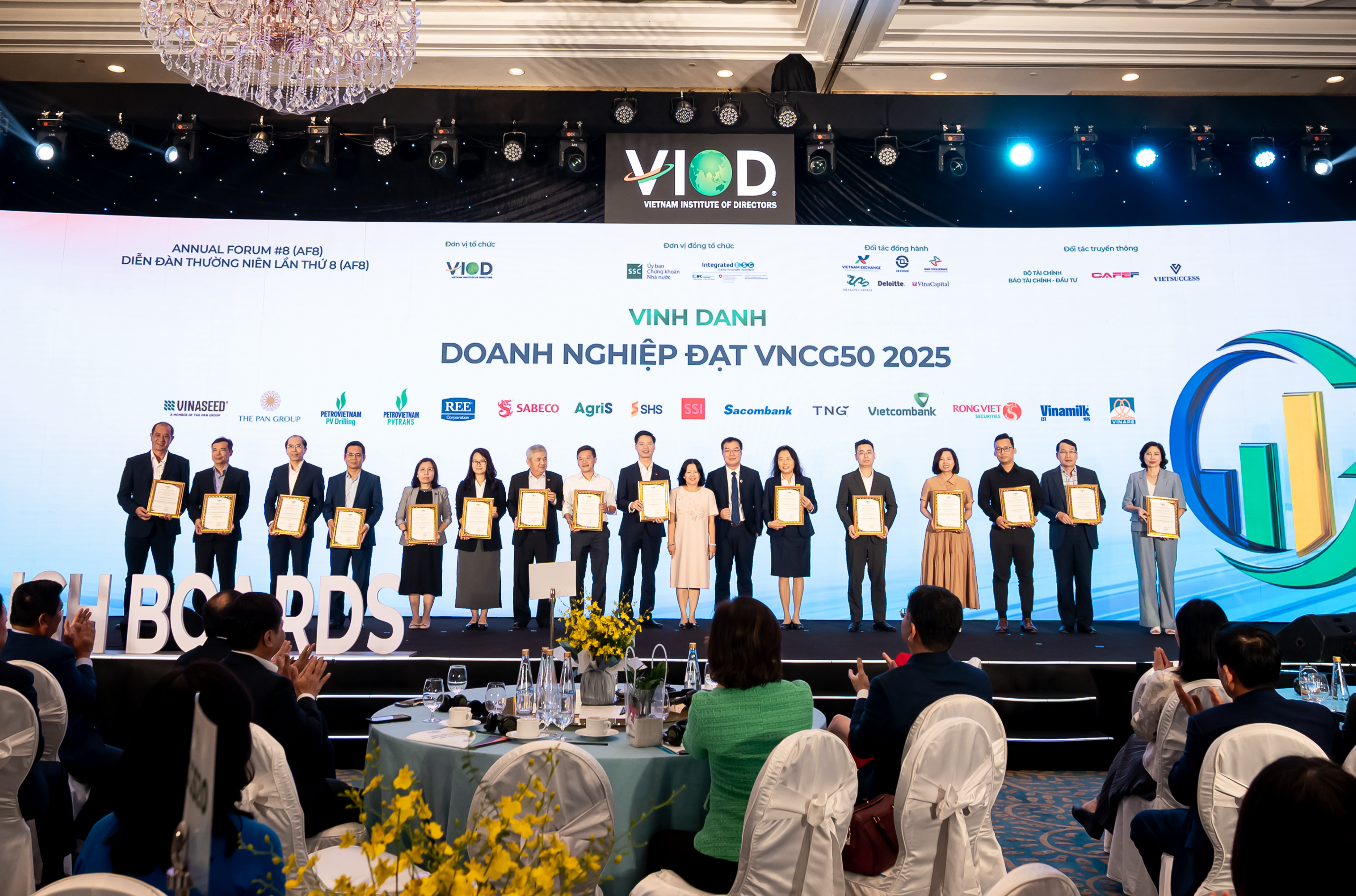
ACGS20 and VNCG50 represent concrete steps supporting Vietnamese enterprises align more closely with regional governance standards. Within this broader integration landscape, what shifts in global corporate governance trends will continue to set new expectations for Boards and Vietnamese companies in 2026?
This post is also available in:
 Tiếng Việt (Vietnamese)